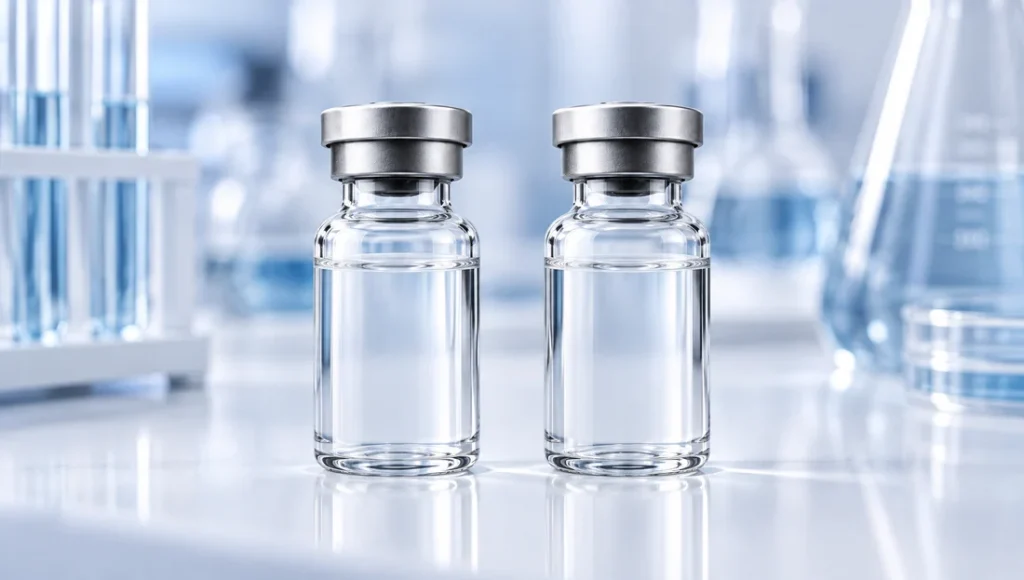
Bacteriostatic water should be stored at controlled room temperature, 20°C to 25°C (68°F to 77°F), with brief excursions between 15°C and 30°C generally permitted under the product labeling. Once a vial’s stopper has been punctured, it’s typically used within 28 days and then discarded, regardless of how much is left.
What Temperature Should Bacteriostatic Water Be Stored At?
The standard answer is controlled room temperature. On FDA labeling for bacteriostatic water for injection, that means 20°C to 25°C, with short excursions allowed between 15°C and 30°C.
In plain terms, a cupboard inside a normally heated or air-conditioned home or lab usually fits. A car glovebox in July does not.
The goal is simple. Keep the water, its preservative, and the vial’s rubber stopper stable until you use it.
Why Does Temperature Matter at All?
Bacteriostatic water is sterile water with 0.9% benzyl alcohol added, which works out to 9 mg per millilitre. That preservative doesn’t kill bacteria outright. It stops them multiplying, which is why the solution can be entered more than once.
Heat and cold can affect the things around that preservative. Rubber stoppers can harden or lose their seal. Extreme heat may affect the solution and packaging. Freezing can crack glass or push the stopper out of place, which compromises sterility.
Honestly, most storage problems I’ve seen weren’t dramatic. They were small habits, like leaving a box near a sunny window for weeks.
The Numbers Worth Knowing
These figures come up again and again, and they’re worth keeping in one place.
The 28-day figure reflects USP guidance for multiple-dose containers, though the manufacturer’s label always takes priority if it states something different.
Should You Refrigerate Bacteriostatic Water?
Unopened vials don’t need refrigeration. Room temperature storage is what the labeling describes.
So why do people put it in the fridge? Usually because whatever they’ve reconstituted with it needs refrigeration. That requirement belongs to the reconstituted product, not the water itself. It’s worth checking the specific storage instructions for the substance being mixed, since those vary widely.
Whatever you do, don’t freeze it. A cracked vial or loose stopper means the whole thing should be thrown away.
How Do You Store an Opened Vial Properly?
Once the stopper has been punctured, a few habits matter more than the exact shelf.
- Write the date of first puncture on the label with a permanent marker.
- Wipe the stopper with a 70% isopropyl alcohol swab before every entry.
- Use a new sterile needle each time.
- Keep the vial upright, the capped area clean, inside its original box if possible.
- Discard it after 28 days, or sooner if the solution looks cloudy or contains particles.
That marker step sounds trivial. It isn’t. Without a date, nobody remembers whether a vial was opened three weeks ago or six.
What About Shipping in Hot or Cold Weather?
Vials often travel through warehouses and delivery vans that aren’t climate-controlled. Short exposures within the excursion range are generally acceptable under labeling, but long hot days in a mailbox are a different story.
If a package arrives noticeably hot or frozen, inspect the vials carefully. Look for cracks, a lifted stopper, cloudiness, or crystals. When in doubt, don’t use it.
Frequently Asked Questions
- Does unopened bacteriostatic water expire? Every vial carries an expiry date from the manufacturer. Don’t use it past that date, even if it’s never been opened.
- Can bacteriostatic water be used for newborns? Labeling warns against use in newborns because benzyl alcohol has been linked to serious reactions in infants
- What happens if a vial gets too hot?Brief warmth within the excursion range is usually fine. Prolonged heat, or any visible change in the solution, means the vial should be discarded.
- Is bacteriostatic water the same as sterile water? Sterile water has no preservative and is generally single-use once opened.
A Simple Storage Habit
Pick one dry cupboard away from windows, heaters, and bathrooms, and keep every vial there. Date each one the moment you open it. Treating bacteriostatic water this way takes about ten seconds per vial and removes most of the guesswork about whether it’s still safe to use.