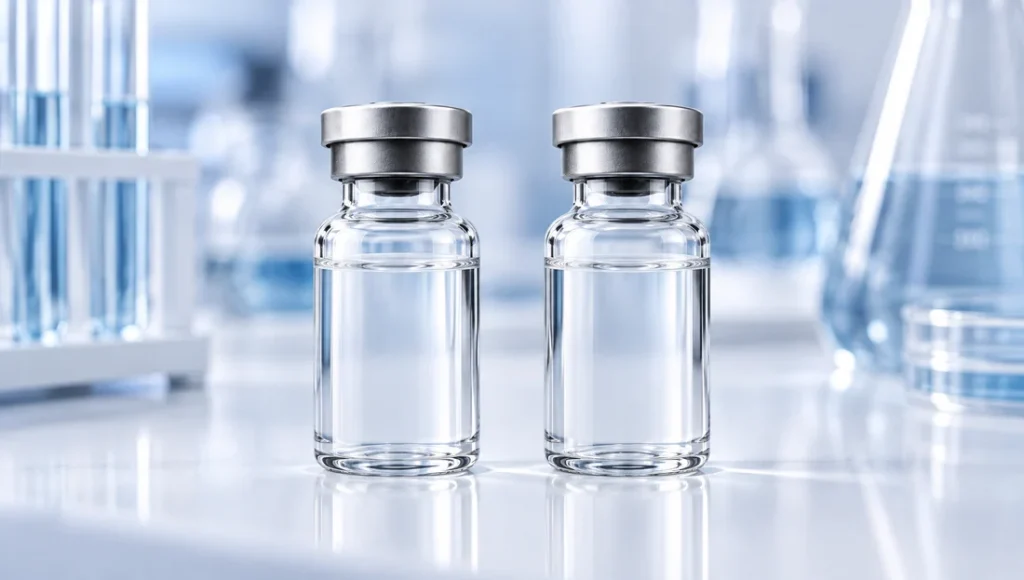
Plenty of vials sold online look professional, but a nice product photo tells you nothing about how the water was made or stored. Some sellers leave out lot numbers. Others ship in summer heat without a second thought. Bacteriostatic water that’s contaminated or mislabelled can ruin the peptide you’re mixing it with.
Below are the questions worth asking before you buy, along with the habits that keep each vial clean once you start using it.
Section 1: Understanding Quality and Sourcing
Q: What exactly is bacteriostatic water?
A: It’s sterile water with 0.9 percent benzyl alcohol added. That small amount of preservative slows bacteria down after the vial has been opened, so you can draw from it more than once. Plain sterile water can’t do that. Keep in mind it slows bacteria rather than killing them outright, so clean technique still counts.
Q: How is it different from sterile water for injection?
A: Sterile water has nothing added, which means it’s meant for one use only. A bacteriostatic vial can usually be used for up to 28 days after the first puncture. The catch is that benzyl alcohol isn’t safe for newborns and doesn’t suit every medication, so read the instructions for whatever you’re mixing.
Q: What should I look for on the label?
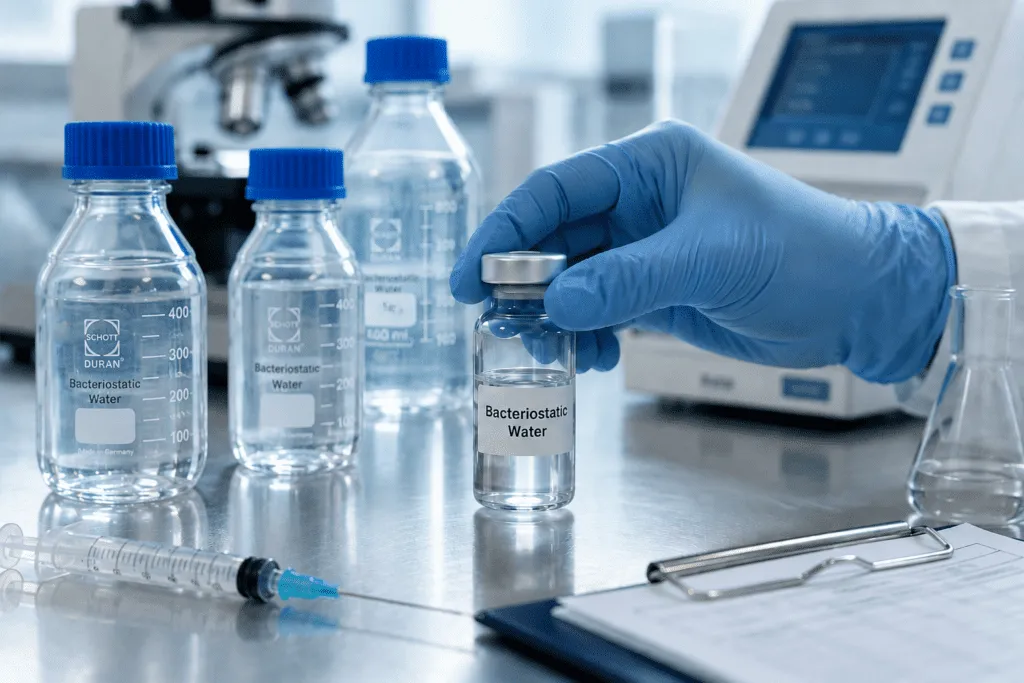
A: You want to see the manufacturer’s name, a lot number, an expiry date, the volume, and the benzyl alcohol percentage. A USP mark means it meets United States Pharmacopeia standards. The cap should be sealed and the liquid clear. Take a quick photo of the label when it arrives, just in case.
Q: How do I know if a supplier is reliable?
A: Good suppliers are open about where their stock comes from, list batch details, and answer questions quickly. You can check the product details on https://bacteriostaticwaterus.com/ and compare them against the points above. Rules differ from country to country, and in the US this is generally a prescription product, so check what applies where you live and talk to a healthcare professional first.
Section 2: Safe Reconstitution and Storage Practices
Q: How do I reconstitute a peptide?
A: Wash your hands and wipe both rubber stoppers with an alcohol swab. Using a fresh syringe, draw up the amount you need. Push the Bacteriostatic water in slowly so it runs down the side of the peptide vial instead of hitting the powder directly. Then swirl gently. Shaking can break down the peptide.
Q: How much water should I add?
A: That depends on how much peptide is in the vial and the concentration your doctor or protocol calls for. Adding more water gives a weaker solution, which makes small doses easier to measure. Write the volume and concentration on the vial. If you’re unsure about the maths, ask a professional rather than guessing.
Q: How should vials be stored?
A: Unopened vials are usually fine at room temperature, around 20 to 25°C, out of direct light. Once you’ve punctured one, throw it out after 28 days. Mixed peptides normally go in the fridge at 2 to 8°C. Don’t freeze anything unless the instructions say you can, and write the opening date on every vial.
Q: When should I throw a vial away?
A: If the liquid turns cloudy, has bits floating in it, changes colour, or the seal looks damaged, bin it. The same goes for anything past its expiry date or opened more than 28 days ago. Never share needles or vials. And if you notice redness, swelling, or a fever after an injection, see a doctor.